Parental preference and how to navigate when our kids choose favorites

Monday, March 24, 2025

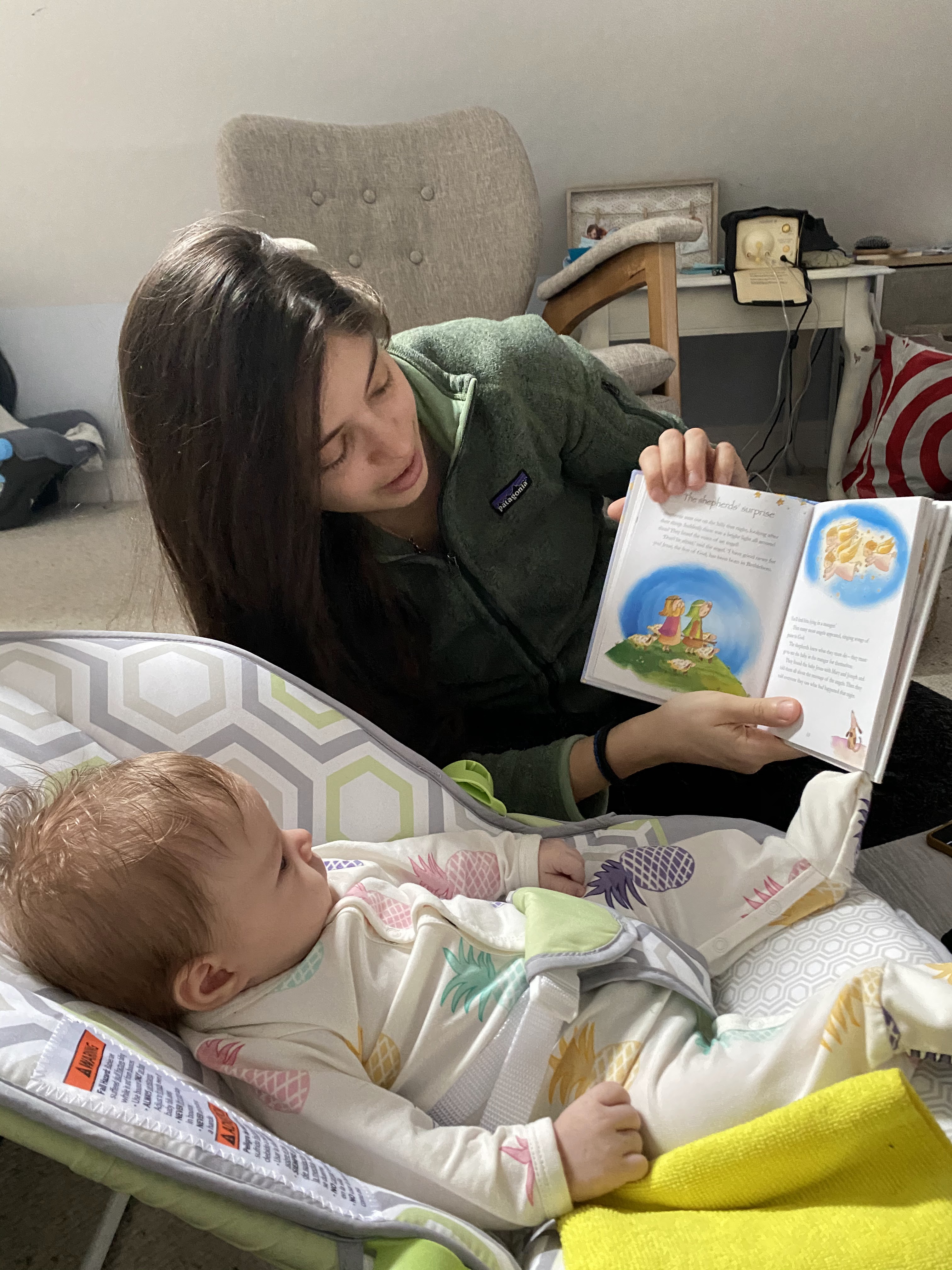
A few years ago, when my daughter was around 18 months old, I had to go through the traumatic experience of a second trimester abortion. The surgical procedure left me on bed rest a few days, grieving for weeks, and with a bonus of contracting a COVID infection from my brief hospital stay. Between surgery, isolation and my grief, needless to say, I just couldn't be a present parent during that time. 

And then, to add to the chaos, my daughter rejected me. Hard

She wanted Dad. Dad to get her up in the morning and make breakfast. Dad to brush her teeth. Dad to get her dressed. Dad to do her bath time and tuck her in at night. It was exhausting for both of us. 

Of course a 1 year old does not understand the world in any complex way, so when we have a big life change, whether going through grief, an injury or simply an increase in work hours, young children will often push away from their once favorite caregiver and favor someone else. 

At the time it was excruciatingly painful for me as a parent, although developmentally normal and healthy. These parental preferences are simply a way for kids who have very little control over their lives to exert some autonomy and reflect a very secure attachment to the non-favorite parent. Kids don't reject parents they don't feel safe with.  

Luckily I recovered, as did my little one. To this day she and her Dad have a special bond, she and I have our own special bond, and I feel so lucky she has many safe and trusted caregivers in her life, including aunts, grandparents, babysitters, teachers and my husband and I. 

If you're going through something like this, know it's a sign of good parenting, it's normal to have mixed feelings about it, and it's not forever. Here's a few things that may help get you through parental preferences and rejection. 

Keep a poker face. Try not to have a big reaction, even if you feel frustrated. It's important to model calm behavior to our kids and continue to support them through rejection. 

Set firm boundaries. Every parent needs a break, and it's not fair on the preferred parent to do everything all the time. While it's ok to bend the rules from time to time, sticking to routines can be really helpful for everyone involved. You can try and say something like "you really love Daddy but he's not available right now. Let's do your bath time and then Daddy can read you your bedtime story." 

Set aside one on one time. Doing something special just the two of you can help reinforce those bonds and create special new memories together. Even a half hour standing "date" every week can reinforce bonds and take steps towards connection and bonding. 

Thoughts? Have you been through this? What helped your family to get through parental preference? 


Detoxing from Amazon and Target (and the stores we're using to replace them)

Friday, March 14, 2025

If you're like us with busy jobs and little ones at home, letting go of Amazon Prime and Target probably feels like a huge blow! We had backed off quite a bit from Amazon in recent years but still relied pretty heavily on Target to fill in gaps when we couldn't find items at secondhand stores or small local businesses, and occasionally used Amazon prime in a pinch around the holidays. The recent attacks on diversity and inclusion policies at private companies was the push we needed personally to take our business elsewhere. I figured if it doesn't work, we can always pivot back to shopping at these places if we really need to. The good news? It seems like a lot of these bans and boycotts are working, at least if you take articles like this as a sign of success

At first, I was pretty overwhelmed- we get all kinds of things from Target, Amazon and some of the other big offenders listed. Over the last few days I've compiled a list of alternative options that are better choices for most of the things we usually get at the above stores. Over time and with practice, we've felt the impact of cutting out these big companies less and less. 

Buy Nothing and Local groups. We have routinely used our Buy Nothing Groups to both give and receive needed items, and this is often the first place we look if we're in need of something. Many local mutual aid groups also give or donate items to families in need. Have a look at what organizations are active in your area. 

Ebay, Goodwill, and other secondhand stores and sites. When it comes to clothes, this is generally the first place I look for myself and the kids. Kids grow so fast, and often you can find close to new options from great quality brands. Learning the Ebay search engine and knowing your size ranges and specific needs can really help narrow your search and prevent unnecessary spending. 

Small and local businesses. This has been a life saver for home improvement and gardening supplies. We have a local hardware store and plant nursery that has probably replaced 90% of our previous Home Depot shopping list. We are also longtime users of our local container free store. 

Costco. We have only had our Costco membership for a year, but it's been a great option for school snacks, certain fruits and veg, milk, and certain dried goods. I imagine we'll get even more use out of their dried goods, clothes and electronics sections moving forward. 

Wayfair and the Container Free Store. We really did not patronize these stores much at all, even when moving into our home, but moving forward when we can't find what we want or need for the house secondhand, these will be two of the first places we look. They both have continued their DEI initiatives and have a history of donating to blue campaigns.

Nordstrom. Some clothes such as basics and swimwear obviously need to be purchased new. Nordstrom has historically supported democratic causes and continues their diversity and inclusion initiatives. When we've tried secondhand stores and struck out, this is usually where we shop. Patagonia is another great alternative. 

Bookshop.org. I love supporting Bookshop.org as they allow you to choose a local indie Bookstore (Our favorite down here is Rohi's Readery!) to "patronize" online. We love getting books as gifts for friends and classmates, and Bookshop.org has been a great way to do that and avoid supporting Amazon. 

Lastly, I wanted to plug Goods Unite Us- an app that helps you understand where different companies sit on various issues. If you have questions about where your dollar is going when you spend at different stores, Goods Unite Us is a great way to be an informed consumer. 

A final thought: If the idea of boycotts and blackouts is overwhelming or out of reach right now, that's okay. Some families may find it's financially not possible to avoid certain stores, or may only have a single option in their area. I am not a big fan of gatekeeping. People should show up however they're able, and we should all meet each other where we're at. Division only serves the other side.

Thoughts? Are you participating in the next boycott? Where have you moved your shopping to? I'd love add more conscious companies to our list. 

We Taught Our Four Year Old How to Read. Here's How.

Monday, March 3, 2025


As a writer and lifelong bookworm, raising another book lover was high on our priorities from well before birth. I mean, we read to E basically from pregnancy onward! I wrote about some of our intentional pre-reading habits here, if you're interested- find that here

But this is a post about reading. It took us a long time to get here, but as of February of this year, our four year old is reading basic books and on a clear, steady path to becoming the latest family bookworm. How we got here was not a smooth ride- we tried lots of strategies, books, lessons, and games with varying degrees of success. Here's the step by step of how we got started on the journey, the twists and turns and when and how things finally clicked! Plus a lot of our favorite resources at the bottom.

Phase 1: exposure. This is well documented in my last post so I will keep this short. Basically from when she was still in my belly, P and I read to E. Then when she arrived, we read some more. As she grew, we KEPT READING. We are read at least a few minutes here and there every day and are on a first name basis with our local librarians. There's good evidence to show language exposure through reading is an important part of raising readers.* 

Phase 2: lessons at 3 (tried and failed) when E was just under 3, she started school. Not long after she started, E started coming home telling us letter sounds, so from pretty early on she was exposed to phonics. After her first semester as we approached spring break, I was trying to figure out a schedule for her days off. One of the things I was considering doing with her was phonics during M's morning naps. We discovered the Teach Your Child to Read in 100 Easy Lessons, and armed with that, some advice with my early childhood educator mom, and some Bob books, we jumped right in. 

The first 10 lessons, which are pre-reading skills, went great. But things quickly went downhill. E was not engaged and very resistant to lessons. I wanted things to be child-led, and it was clear where E was leading things. She was not enjoying it and did not want to do the lessons. So, as stubborn as I can be, the humbling experience of parenting prevailed and we took a break from reading lessons. It was hard for me to do, but clearly the right move for E. 

Phase 3: backing off. From March of last year up until December, we did zero formal reading lessons. None. I did try once or twice again over the summer to approach the idea again, associating lessons with rewards and trying the first Bob book, but she made it clear she wasn't interested. 

So instead, we focused on other activities that she enjoyed. We read together as always, participated in the library summer reading challenge, and played letter sound games (what can you think of that starts with the eh sound? How about B?). We sang the apple apple A-A-A song. On trips where she had her iPad we played phonics games. We looked for letters we recognized out and about on signs and billboards. I only asked if she wanted to try reading lessons again a handful of times, and she made it clear that she wasn't ready. I figured we could try again over spring break if I felt she was ready. 

Phase 4: When E returned to school from winter break, she was sent home with the first Bob book, a list of sight words, and a reading log. From here we let her decide if she wanted to do the log (after all, she is not even technically in preschool at this point), and most of the time, with a fair bit of help and encouragement, she was able to sound out 3 letter words. 

That was about a month ago, and now she is well on her way in her reading journey. While she doesn't read independently (and we don't push it) she can easily sound out basically structured words and a few sound words. It has been fun seeing how quickly she is learning now that she's really ready, and we're very excited to see where the spring takes us! 

Before I wrap up, here are our favorite resources and strategies that we used to expose her to phonics and help her along on her reading journey, with links included.

Teach Your Child to Read in 100 Easy Lessons. I will start by saying this was my *least* used resource on the list. It really did not work well for our kid. However, I know several parents that have vouched for this method, enough that I am keeping it at least a few more years to use with M. The approach is certainly simple and evidence based. 

Bob books. I think this is a pretty well known one, but worth mentioning. E enjoys them and loves that she can put them in her purse to read at church or on long car rides (she is an accessories girly all the way) 

Teach Your Monster to Read. We had a few trips last spring and while E didn't quite get the hang of this game at first, she did like it and play it with our help. I plan to use this game for her on our next road trip and imagine she'll enjoy it even more now. 

Chapter books. This one surprised me, but I'm convinced that the language exposure made a difference for E. She got a bunch of Angelina Ballerina and Catwings early chapter books for her birthday, whizzed through them over winter break, and started reading phonetically not long after. The combination of words and pictures in a new format really excited her, and it made her feel like a big girl to read such long books. 

Other games and songs. Simple games like "let's take turns thinking of things that start with the letter B", I spy letters on signs,  or the apple apple A-A-A song by Barbara Milne, were a regular occurrence in our house leading up to E's breakthrough. They may seem like small activities but I do think repeatedly using these strategies over a year made a big difference!

That's our story. What strategies are you using to read with your kids? 

A final note - if your kid is not showing signs or interest in learning to read. Please do not sweat it! Most children start reading around 6 or 7 years of age, and there is really no rush to push them to start reading sooner. I was totally ready to wait another year or two, if our school teachers didn't feel my daughter was ready. 

Positive Sibling Relationships and building strong family bonds

Thursday, February 20, 2025


As our children have grown, it's been fun watching their relationship develop. As M becomes more interactive, both kids have found creative (and adorable) new ways to engage and play with each other. 

BUT. 

The adorable interactions have also come with increasing annoying each other, invading personal space and conflict. Our eldest child doesn't always want to share her toys, and our youngest has a lot of annoying but developmentally normal habits. I'm very close with my siblings and my husband and I both pictured a close-knit family where our kids had similarly tight bonds, but we are also realists. While I'd love for our kids to be close as they grow up, our main goal as parents is to try and maintain the peace in our household and parent fairly. Luckily, much of the success behind close sibling relationships boils down to just that- equitable parenting. Here's a few things we're doing to try and maintain peace and positive sibling relationships in our home.

Prioritize family time. So much of our kids' behavior stems from wanting our time and attention. With two working parents (one full time and one part time), time that all four of us are together is pretty limited. We have to be very intentional with our schedules to ensure we have regular quality time together. For us, the most convenient way to do this every day is a family meal. We do dinners together- everyone eats the same thing at the same time, and we talk about our days. We share favorite, hardest and funniest parts of what happened during the school or workday, share what we've been working on or struggling with, or sometimes just eat quietly together. We also try and incorporate family walks and bike rides, and the occasional longer or more adventurous outing during the weekend. Older families might choose to do game nights instead, or have a dedicated night every week to do something as a family if daily family meals aren't an option. The key to whatever you're doing is that you're doing it together.

Catch them in kindness. This may sound silly but it's actually been shown to be much more effective than other forms or discipline or behavior modification. Catching a child doing a wanted behavior can be a powerful tool. I try to keep it simple- "you shared that toy so nicely with your brother!" plus a hug, high five, or a shoulder squeeze. We also love "positive gossiping" as a strategy- in the car or on walks together, my partner or I will loudly share, "E was helping the babysitter find M's pacifier this morning- it was so nice of her!" Both of these approaches can be a very effective way to reinforce wanted behavior (in this case, kindness.) 

Avoid choosing sides. This can be tricky if you have a big age gap or very young kids, but we try very hard not to favor one child, even from an early age. Our kids are quite young, so at this age it mostly involves lots of listening to big sister, encouraging her to communicate her feelings directly to her brother with words, and helping her brainstorm ideas for solutions when she is frustrated. Apart from listening we try really hard not to be the judge and jury of their conflicts, and although we do have to sometimes help come up with solutions, I am impressed more often than not with my daughter's ability to figure out how to negotiate conflicts. 

Zero tolerance for bullying.  I know this sounds contradictory, and the reality is with a younger sibling this is a very fine line to tow! Our kids are 2.5 years apart, and while M is getting bigger, stronger and more verbal every day, he can't always stick up for himself when a toy or object gets snatched away. We can't moderate the kids every moment, but if we see something go down that upsets him (and occasionally big sister when she is the victim), we loudly call it out and correct the action. This might be a "hey, no bullying!" or if one of them has left the other one crying, giving lots of love and attention to whoever was getting picked on. As E has gotten older this has definitely gotten easier, but of course they're both human and from time to time we do need to intervene. 

Protected one on one time. This might be one of the most impactful things we can do to reduce sibling rivalry. It may sometimes feel like no amount of time is ever enough for our kids, but even a few minutes of setting the phone aside and getting on your child's level for some dedicated attention can make a huge difference. This tells your child they are a valued and important person to you, and that they matter. When M was tiny, E and I would spend an hour during M's naptime on the couch reading together. Now that he's older (and we get plenty of time together while E is at school,) I've been trying a new routine where E and I run errands or do something special together for at least an hour a week. Scheduling 'date nights' where kids can get one on one time with each of us individually has been really beneficial for both her and us- we love getting to know her and spend time with her without interruptions or distractions and she loves having our undivided attention. 

We're pretty early on in our parenting journey, so we're far from the home stretch, but hopefully these strategies will put down a foundation for our family to stay close for years to come. 

What do you think? Anything I missed? See below for a few great articles and resources on parenting siblings and making sure each child is valued.

The Science Behind Positive Attention


Low Waste Cooking: Our favorite quick and easy plant-based meals

Monday, February 3, 2025


Last year, one of our new year's goals as a family was to reduce our meat consumption. With two working parents we have no choice but to run a tight ship it we want to keep things going smoothly, stick to our food budget and minimize waste. 

We have a loose meal plan that helps tremendously with this. In general we cook two big meals on the weekend that we eat the first half of the week, then cook the rest of the week with a break on Thursday for takeout. We generally stick to cooking one meat dish and one meal with fish, and the rest of the home-cooked meals are plant-based.

A year on and I can say we've finally found a rhythm that works for us. Here are four of our most-used dishes and links to where we got the recipes (plus a bonus tip at the end!)

Greek lentil soup (fakes): this is a hearty, low effort meal that can come together in 45 minutes or less. What's more, it's generally pretty hands off. My biggest meal pet peeve is when a meal boasts being easy or quick but doesn't factor in the amount of chopping needed (anyone else? Just me?) This one is definitely not that, and the hands-on time is pretty quick. We usually serve this with garlic naan or the everything but the bagel bread from Aldi, feta cheese and a side salad (we love making salads from scratch but are currently in the bagged salad season of our lives for efficiency and survival.) We use a recipe typed into a word document from a friend in Greece, but this recipe is pretty close (almost word for word!) We just swap out fresh tomatoes for tinned crushed tomatoes or passata.

Revithosoupa: I discovered this in the cafeteria at the university where I studied during my Fulbright grant. For 3 euros you would get this incredible rich, completely meat and dairy-free soup and bread, and it was the perfect quick meal on a cold winter day. We're actually making it today when it's unseasonably cold in Florida (55 degrees Fahrenheit and chilly!) and the kids both tend to like it about half the time we serve it (real talk, that's a win in our family! both kids have become major snackaholics lately.) It can also be made with dry chickpeas (soak at least 12 hours before boiling) or with two cans of chickpeas, drained.

bonus tip: take two cups when finished cooking and blend with some olive oil, salt, pepper and the lemon juice before re-adding to the pot. This makes for a thicker, creamier texture that's just amazing. 


 Red lentil dal with tarka. 

This one's a new addition I found during my library ritual of flipping through a cookbook while the kids play in the children's room (highly recommend!) It comes together SO quick and is so filling and tasty! And my favorite part is the tarka we make to go on top and add a little heat to the grown ups' plates. It's also versatile - we often toss a handful of greens in towards the end or mix with yogurt for some extra calcium for the kids. 


Sheet pan tofu and broccoli with peanut sauce. 

This was another library cookbook discovery, but I've followed Jenny Rosenstrach for a while through her writing on Cup of Jo and had somehow never picked up one of her cookbooks! There are so many great recipes in The Weekday Vegetarians. This one is a mix of the basic baked tofu and spicy (ish) peanut sauce. We just add broccoli, tossed either in olive oil, salt, garlic powder and pepper, or soyaki sauce if we're feeling fancy, and serve on a bed of rice. 


Honorable mention: Bean and cheese quesadillas. This could also be labeled "anything with beans" because when I open a can of black beans my two grazers inevitably start eating them right from the sieve in the sink! We like to do basic rice and beans with bell peppers, onion and garlic (easy, quick, cheap and great because the kids get to choose additional toppings and think its a fun game to assemble their own meals) and quesadillas, which my four year old still calls "bean pizza." 

So much of low waste living is not about the big buys or changes - it's the simple little things you can do every day and might not even think about. 

What are your favorite plant based recipes? I'm looking to add some new ones into rotation in 2025! 

How we're getting our kids into hiking (in the flattest state ever.)

Tuesday, January 21, 2025


Peter and I have always loved spending time together outside (it's a big part of why I ranked my residency so highly- it was a ten minute drive to some amazing state parks!) so we knew we wanted to raise kids who love spending time outside too. Since E has gotten older, I'm starting to realize what a challenge it can be to bring little kids along hiking, and I've heard from lots of parents of young kids that this is a common problem. While I don't doubt she can do it, the mix of boredom and whining can be really grating and suck the fun out of even a short hike. And to an extent, I get it. Who wants to hike when you've got playgrounds and splash pads?


Fast forward a few years and our kids are now 4 and 1.5, and we're looking ahead at a few trips this summer that will involve some great hiking destinations. We really don't want to skip these parts of our trip, so I'm starting to work on getting both kids more into hiking now so we can squeeze at least a few trails in this summer. Some of these are methods we've tried and some are suggestions from other parents a little ahead of us, so I'll definitely post an update once we've wrapped up our trips about how things went.


Start small and short. When I trained for half marathons, this was key to being able to accomplish my goal- starting my training with super short distances and slowly building up. For us this means neighborhood walks and boardwalks that are under a mile. My kiddo can easily ride her scooter to and from the nearest playground, but we're currently working on getting her to the library and back, which is double the distance. Once a week on my full day at home with the kids, we make the mile-ish walk to the toddler story time, or hit a local nature trail or boardwalk. I'm hoping this will make for an easier time doing mile-long hikes in the summer. 


Make it a game. E actually has a little background in hiking- from the age of 18 months to 2 years, she was part of a free forest school and went on lots of hikes with the older kids in her cohort. The big kids loved playing different games as they walked, from scavenger hunts to I spy (and of course, lots of imaginary play.) We like to play a lot of sensory games too- talking about what we can see, hear and smell (this exercise is also a great way to introduce mindfulness.)


Food can be an excellent motivator. E is definitely a snackaholic, and she usually gets a lot farther if I bring a few different kinds of snacks for her and her brother. I try to keep some loose rule in place so we're not stopping every 5 feet- on the walks where we live there are plenty of benches so we have to get at least to the next bench or so before we take a break. And for longer trips I'm not afraid to pack along some sweets like kisses or M&M candies for her to have once we’ve reached a certain distance. 


Be prepared to carry. Even our big kid gets tired, and while I know she's capable of walking a fair distance, it's still not uncommon for her to want to be carried sometimes. Luckily she's still just within the appropriate weight for our soft carrier, but this summer we plan to upgrade to a toddler size carrier that we can either wear on the waist or easily fold into our backpack. It can be a fine line to know when to push them to keep going, so having a backup way of getting back seems like a good idea.


Choose an exciting destination. I've heard this from parents of older kids but I've also seen it with E- when there is something cool at the end of the hike she's definitely more willing to keep going! Things like waterfalls, arches and even a little creek bed to splash in can be a big motivator for kids to keep on moving. And it doesn't have to be the destination itself- interesting bridges, rocks to scramble up and narrow passages to squeeze through can also get kids back in the mood for adventure.


If you take your kids hiking, what has worked for you? I'd love to hear your experiences! And will definitely post an update of some kind when we get back. 


The surprising way we took a low-waste trip to Boston

Monday, January 6, 2025

Two small children having a snack at a toddler-level table

The kids having a snack at their art table.

This fall, my family and I did something that felt a little bit out of our comfort zone.

We have been so thankful to buy a home and grow our family in the last few years, but it also means that money has been a bit tight. So when we were invited to three(!) big family events within a few months of each other, we knew we had some difficult decisions to make to fit them into our budget. 

I had been toying with the idea of a house swap on and off since we bought our home, but there weren’t really many trips we were planning as we prepared to welcome our son, then care for him as a newborn. By the fall, he was one and we were eager to get back into traveling to explore new places and see friends and family. I also knew from a work trip over the summer that apartments and home rentals work much better for our family at this stage than hotels. So when my cousin announced her wedding in the neighborhood we lived in when E was born, I realized it might be a great opportunity to try house-swapping out for size. 

If the term isn’t familiar to you, a home swap is essentially two households swapping homes for an agreed on length of time. It could be extended family, or someone found through a website or agency. According to this BBC article it’s been a rising trend since the 2000s, getting a boost from the film ‘The Holiday’ (and probably also helped along by the economic crisis of the late 2000s.) My parents actually house swapped once with cousins when we were kids, and Peter and I had relatives from Greece stay in our tiny New York apartment while we were traveling one holiday. It had gone pretty smoothly and we were happy to help another couple make their trip more affordable. What’s more, house swapping is considered more eco-friendly than other forms of travel, as it reduces carbon footprint, waste and resource consumption. Realizing that I knew the neighborhood we’d be interested in pretty well (and after lots of talking and thinking about it,) we decided to try to find a family to home swap with us for a week in October.

Here’s the nuts and bolts of how we did it, how it went, and what we learned and might do differently moving forward.

A large, spacious living room with lots of light

This room looks a bit different now, but the view from the living room window is still one of my favorite spots in the house.

Finding a family to swap with.

For me, this was the most nerve-wracking part of the whole experience. How do you know you’re exchanging your home with someone trustworthy? We could have used a service -Home Exchange has great reviews and has been around awhile, but the annual fee was a bit of a deterrent, since we didn’t know if we’d use the service again if it didn’t work out.

Instead, we opted for a bit of an unorthodox choice- Facebook groups. 

I have to say, under normal circumstances, I couldn’t recommend this. Even typing it out sounds like the start of a scene from The Vacation From Hell. We opted for Facebook *only* because I was a regular user of the Mom groups for this neighborhood when E was born, and knew they were exceptionally strictly monitored. I had used the same groups dozens of times to buy, sell, gift and exchange baby items, so this felt like a slight level up from what I had already been using them for, and had positive experiences with. 

I posted a brief description of my idea, our home, the dates we were interested in swapping, and what we needed in a home, and immediately got quite a few responses! We ultimately decided to swap with another family of four who lived just one street over from our old home. It had enough space for us and was a short walk from the local transit station. I was excited to revisit our old playgrounds, libraries and restaurants with our kids now that E was older. 

Preparing to swap.

Since this was our first time having someone stay in our home while we weren’t there, it took a fair bit of work to make everything go smoothly. We spent many Saturdays decluttering, reorganizing and making our guest room and office into less of an afterthought and more liveable, comfortable spaces. We organized the garage so the family could easily find our beach gear. A week before the swap we paid to have our home deep cleaned by professionals. We borrowed an extra twin mattress and bought separate towels and sheets for our guests. I also spent a lot of time making and editing a document on accessing and running the house and wifi, as well as a few rules and requests for the end of the stay. 

The other slight difference to other forms of travel was timing- while I usually search for the cheapest flight itinerary, but having to coordinate with another family meant we had to make sure we were out of the house and back at roughly the right times, and as a courtesy I checked with the family in Boston to make sure our travel times worked for them. A very manageable problem, but worth pointing out.

Snuggled up in the coziest armchair (with the cuddlier of the two cats.)

The home exchange.

The exchange itself was surprisingly smooth! The apartment we stayed in had two bedrooms and an open work space off of the living room/play area, so it worked well for our needs (mostly vacation time with a little remote work for Peter.) Their kids were older than ours, and although they did hide as many small toys as they could, we did have to watch our son pretty closely during the week we were there. They also had two very sweet cats who occasionally showed their faces for cuddles before disappearing to hide from our noisy kids. 

The biggest hitches were pretty minor- on the night our babysitter drove in for the wedding, she parked incorrectly and I missed a call from our hosts at the wedding reception for her to move the vehicle. We apologized and the family was very understanding. We also had one mishap where one of the cats bolted, and I’ve never been so thankful to have married a cat person- Peter very quickly bounded down the steps and grabbed him just as he was making his way down the sidewalk. Apart from a noisy night or two when the unit above had a party, we were very comfortable the whole time and things went pretty smoothly!

Our kids made themselves right at home!

The return home and some afterthoughts.

Heading back home went pretty well, but it did take more work than leaving a hotel room with linens and messes to be dealt with by someone else. We wanted to leave the apartment as nicely as we found it, which wasn’t easy considering we had to leave to catch a flight early in the morning. We spent the night before departure tidying and replacing any food we had used up. I assembled a small bag of thank you gifts for our hosts and their kids. Early the morning of our flight we had to get the kids up to wash the sheets and towels and break down the travel crib we had borrowed. Once we triple-checked we had locked everything up properly, we were off.

We made it home that afternoon to a house in similar shape to when we left it and a TON of food and new pool/beach toys the family had ordered and left behind (Amy, if you’re reading this, THANK YOU!) A few things got misplaced but were found eventually. One pool float managed to break, but they were nice enough to replace it for us. I asked the mother who coordinated with me on our exchange what they might like to do differently next time, and she assured me everything was great on their end too, and offered to try this out again during the summer months, which I take to be a good sign! 

It left us feeling ready to try a home swap again in the future- we are actually looking at another home exchange experience in the coming months when we visit family overseas. Here’s what I’m keeping in mind to make future swaps go as smoothly as possible.

Returning to playgrounds E last visited when she was two was pretty wild

Decide what you’re looking for. 

Do you need one bedroom? Two? A dedicated workspace? Is some amount of pet or plant-sitting ok? Do you need to go and be back at a fixed time, or are your travel dates fluid? It helps here to be flexible, but if there are must-haves, be clear on needs before you start your search.

You also need to decide who you’re looking for, meaning who you are comfortable swapping homes with. The ideal situation is going with someone who is well-vetted- just like when you’re looking for an airbnb. Apps usually have systems to review guests and host homes, but knowing someone personally is another option. In our case, the who also mattered in that we were bringing young kids, and wanted to be in a place that was set up to host our children. So swapping with a family of children similar ages to ours worked out great.

A word of caution: none of these strategies for choosing the ‘right’ family are foolproof; they help, but cannot completely prevent problems from arising. There is always going to be an inherent risk when inviting someone to use your home. Bad exchanges, like ones involving ruined kitchen equipment and huge messes that required professional cleaners- are rare, but they do happen. To that end, think carefully about whether this kind of travel is right for you. Because my parents live close and kept an eye on things, and we don’t have nice furniture or many valuables (and the ones we did, we locked up carefully or removed from the home), we felt comfortable moving forward with a home exchange. But even for us, risks are always present.

Write up a house manual. You might know how to run your home as a well-oiled machine, but a total stranger is going to have no clue if the router needs to be rebooted every now and then or the sprinklers need adjusting. Start with the very basics- how to find and get into the house. Add photos if you can (visuals can be a huge help!) We also printed out step-by-step instructions for our coffee and tea machine. 

If you’re swapping vehicles, be sure to add rules and recommendations on what to do if any problems arrive. As a bonus, we like to share a local guide to our area with the nearest grocery stores and our favorite restaurants, parks and attractions. 


Set clear expectations at the get-go. If there are any big take-homes, this is it. Cleanliness and common courtesy can mean different things to different people. If you want folks to strip the beds and run a load of linens, or have the place cleaned professionally, tell them! If you don’t want any smoking on the premises or would like your food replaced (or left untouched,) be clear from the start. For us this meant delineating the house rules and expectations in a document. This helps avoid so much stress and unmet expectations. 

Keep lines of communication open. We didn’t have a constant stream of consciousness text, but for little things (where’s the litter box, again? How do you access the basement?) you can and should keep in touch. We also enjoyed hearing from the exchange family about how much they enjoyed the pool, beach and our favorite local places. 

Home exchanges probably aren’t for everyone, but when done right, they can be a fun, low waste and engaging way to see another part of the world or visit friends and family. We're excited to try and exchange our home again this summer!

What do you think? Is this a kind of travel you would try? Have you house swapped before? I’d love to hear your experiences!


Reading With Your Kids

Thursday, August 8, 2024


 About a year ago I submitted an article to Readingwithyourkids.com. Lately I've been revisiting this area in my own life as we're working hard to raise a fellow book worm, so I'm republishing it with permission here. Hope you enjoy! PS, Rory and the folks at Reading with Your Kids also have a podcast which is a really great listen for my fellow kidlit lovers. 

Before my daughter was born, my husband and I read to her. We'd pick a book from the small pile my mom, a retired school teacher and children's librarian, had sent us in the mail, giggling at the awkwardness of animatedly telling a story to my belly. We'd laugh at lines like, “Daddies are delicious,” and wonder what she'd think of these books once she arrived. 


Those early days feel long behind us now, but we never stopped reading to our daughter, now three, and our son, who just turned four months old. We've all gone through phases of waxing and waning interest and engagement, like our daughter at four weeks of age, when she'd stare at us with a puzzled expression—or just cry—or at one year when the most interesting thing about books was the flavor. From the sleepless nights of early infancy to the trying days of defiant toddlerhood, we have always come back to reading together. Whether cuddled on the couch on a rainy afternoon or plopping down in a corner of our local library, reading together has become a comforting constant for our family. 

Reading as a family is more than just a pleasant activity to enjoy together. Reading to children as young as newborns has many benefits both in their early brain development and further down the road once they are school-aged. Literacy has been associated with higher education completion rates and earning potential and lower school dropout and incarceration rates. Moreover, the vast majority of brain development occurs in the window from birth to two years of age. Reading to children during this critical period facilitates that development. 

The benefits of reading with young children are well studied, and as a pediatrician, I'm lucky to work with and counsel new parents throughout early childhood on why reading to children can be so beneficial. Here are just a few reasons why reading to your kids is so important—especially at a young age—and some tips on making it more fun as a family. 

Reading aloud improves early childhood vocabulary. Children learn words from what they hear in the world around them. Some of this comes from conversations with parents and peers. But books—even picture books—have richer, more complex language and expose children to higher-level vocabulary at an early age. Both types of language are crucial for success later in life, and the more words children are exposed to early in childhood, the more successful they are at reading once they reach school age. 

You certainly don’t have to start with long books containing big words or complex sentences; in fact, it’s best to start small. For young infants, choose picture-forward books with shorter text. Brains are programmed to enjoy looking at faces, so books featuring people and facial expressions are a good choice at this age. You can talk about things happening in the pictures, ask open-ended questions, and point out objects on the pages. 

Reading exposes infants to natural speech patterns. Have you heard of serve and return language? If not, you've certainly heard it. It's the natural way that people converse with each other every day, such as asking a question while another person replies or making a comment that someone responds to. It’s often described as a tennis match. One person serves the ball to their partner across the net, and the other returns it, continuing the conversation This type of interactive speech pattern has many benefits both in speech development and secure attachment to caregivers. Not only does it model and help babies practice this style of speech pattern, but also, by encouraging and responding to an infant’s coos and babbles, it fosters secure attachment and positive brain development. 

How can you practice serve and return language with your kids? Ask questions! What do you think will happen next? Who do you see in this picture? Will you count all the animals with me? Try it the next time you're reading with your child. Even in the pre-verbal period, this encourages infant babbling, which develops into normal language patterns later in life. 

Reading together promotes parental bonding. When you enjoy doing something, you want to do it more. Anyone who has binge-watched a TV show or eaten chocolate can tell you this, but it’s also a scientific fact. Reading is no different. When children associate reading with curling up on the couch with loved ones, it creates a positive association that will bring them back to reading again and again. 

Some great ways to incorporate more reading into quality time include reading during bedtime and naptime routines, taking little ones on outings to the library, and attending local story time events with them. We also always keep books within arm’s reach at home—we keep a large basket of picture books next to the couch, in our bedroom, and in our children’s play spaces. Some parents may use a tent, pillows, or toddler-sized furniture to create a reading nook in the home. This creates plenty of natural opportunities to plop down on the couch and read together. 

Reading the same story allows for language acquisition. Any parent of a toddler right now can probably recite every word of at least one of their kid’s favorite books. For us, it’s Little Blue Truck and Chicka Chicka Boom Boom. At their peak, my daughter would ask us to read these books upwards of ten times a day. What gives? As it turns out, it’s more than just your toddler trying to assert some autonomy (although that’s certainly part of it). Every time you reread that story, your child is listening, learning, and solidifying their understanding of new words and concepts. With each reread, children are listening, processing, and understanding more of what’s being read. 

Reading together is an important part of school readiness. In addition to exposing children to natural speech patterns and vocabulary, reading together introduces children to the building blocks of literacy. This includes identifying sounds in spoken words, connecting letters to sounds, understanding what is being read, vocabulary, and fluency. While your child doesn't have to be reading before kindergarten, exposure to the building blocks of literacy through reading aloud together will help children achieve literacy once they reach school age. 

A final note. Reading to a young child is not always easy. It may feel strange in early infancy or later, in the toddler years. It may become exhausting as they get distracted, uninterested, or feel too wiggly to sit through an entire book. The one constant in early childhood is that kids change constantly; what didn’t appeal to them last week will suddenly become their favorite thing. Remember, if your child goes through a period where they’re no longer interested in reading, don’t push it, and try not to sweat it. You can always switch to shorter books, less time reading, or take a break altogether and try again in a few days.

Not long ago, I came home from a shift stressed out. It had been a busy day, with back-to-back patients, complicated issues to triage, and little time to eat, drink, or pump breast milk for my baby boy. I walked through the door on edge and eager to shower off the stress and germs of a busy day at the clinic before hugging my little ones. 

“Mama, I missed you! Can we read?” My daughter, almost three here, was making a beeline to hug me, scrubs and all. 

“Not yet!” I said. “Wait until I’ve showered!” 

Since we’re heading into cold and flu season, I make a conscious effort to change clothes before embracing my children. A shock of guilt ran through me. The disappointment was written all over her face. 

I hurried through my shower and tossed on my favorite lounge pants, sweatshirt, and socks, eager to find my daughter before she lost interest in hanging out with me. I found her in one of our favorite reading spots, curled deep into the corner of our couch, surrounded by her stuffed animal friends, her favorite plastic Maui figurine, and, of course, piles of picture books. She was reading to herself—or at least trying. She’s memorized a few of her favorite titles by heart. 

“Sorry, I had to shower first,” I told her. “Can we still read some books together?” A smile lit up her face. “Of course we can!” she exclaimed. “Let’s start with this one.” 

Sources: 

1. Lee, Melissa. When it comes to salary, it’s academic. The Washington Post, July 1994. 

2. Rogot et. al. Life Expectancy by Employment Status, Income, and Education in the National Longitude Mortality Study. Public Health Reports July-August 1992 (107): 457-461. 

3. Pfefferbaum A, Mathalon DH, Sullivan EV, Rawles JM, Zipursky RB, Lim KO. A quantitative magnetic-resonance-imaging study of changes in brain morphology from infancy to late adulthood. Arch Neurol. 1994;51:874–887 

4. Massaro DW. Reading Aloud to Children: Benefits and Implications for Acquiring Literacy Before Schooling Begins. Am J Psychol. 2017 Spring;130(1):63-72. doi: 10.5406/amerjpsyc.130.1.0063. PMID: 29508957. 

5. Serve and return. Center on the Developing Child at Harvard University. (2020, January 27). https://developingchild.harvard.edu/science/key-concepts/serve-and-return/ 

6. Kok, R., Thijssen, S., Bakermans-Kranenburg, M. et al. (2015). Normal variation in early parental sensitivity predicts child structural brain development. Journal of the American Academy of Child and Adolescent Psychiatry, 54(10), 824–831.

7. Kuhl, P.K., Ramírez, R.R., Bosseler, A., Lin, J.L. & Imada, T. (2014). Infants’ brain responses to speech suggest analysis by synthesis. Proceedings of the National Academy of Sciences. 111(31) 11238-11245. 

8. Malenka RC, Nestler EJ, Hyman SE (2009). Sydor A, Brown RY (eds.). Molecular Neuropharmacology: A Foundation for Clinical Neuroscience (2nd ed.). New York: McGraw-Hill Medical. pp. 147–148, 367, 376. 

9. Razdan, S. (2023). 10 tips to help your child fall in love with reading. HealthyChildren.org. https://www.healthychildren.org/English/ages-stages/gradeschool/school/Pages/10-Tips-to-Hel p-Your-Child-Fall-in-Love-with-Reading.aspx#:~:text=Read%20together%20before%20bedtime.,r ead%20a%20book%20to%20you! 

10. Horst JS, Parsons KL, Bryan NM. Get the story straight: contextual repetition promotes word learning from storybooks. Front Psychol. 2011 Feb 17;2:17. doi: 10.3389/fpsyg.2011.00017. PMID: 21713179; PMCID: PMC3111254. 

11. burrows, heather. (2017). Reading and literacy in children | CS mott children’s hospital . Reading and Literacy in Children. 

https://www.mottchildren.org/posts/your-child/reading-and-literacy-children

Lightening the Load: Some thoughts on Fair Play

Tuesday, October 10, 2023


Do you ever feel like there’s so much stuff running through your brain that your head might spin off? Not like, ‘oh what kind of bird is that?’ stuff. Things like, ‘I’d better not forget to email Nicole,’ or ‘shoot I need to put the fish in the oven’, or ‘oh crap, we never RSVP’ed to that birthday party.’ I’m not sure where I read about Fair Play- probably one of my local Mom groups- but as soon as I read it, I was hooked. First, because it gave a name to all these last minute mini-panics spinning through my head at any given time: mental load. Second, because it offered a very appealing possible solution. 

A little background: right after Peter and I got married, he left his job and we moved to a new state together. While I started my residency, working up to 80 hours a week (sometimes more,) he was home, job hunting and taking the lion’s share of the household chores. Prior to marriage we were always living apart, so we never really had a traditional division of those kinds of duties as a couple. That being said, I had always wondered why I was the only one stressing about finding and interviewing nannies and sitters, shopping for the next size up of clothes for E, or researching affordable cross-country moving companies. Fair Play, by Eve Rodsky, is all about the ‘why’ behind this question. I really enjoyed the book- it was well researched, thoughtful and eye-opening (if, at times, rage-inducing.) But what I really appreciated was that, unlike many books in the nonfiction genre, it didn’t just present a depressing problem with no hope of a resolution- Rodsky not only came up with a strategy for couples to re-allocate both visible and invisible tasks, she beta-tested it and it’s now available as a game couples can play to make things a little more equitable- fair play. 

The concept is surprisingly (almost embarrassingly) simple. The game consists of a card deck of different tasks- from things you do every day (cooking, laundry, dishes,) to the planning and mapping out of life (think meal planning, managing the family calendar,) to things that come up occasionally but still occupy brain space (think taking your car in for repairs and arranging childcare.) There are other cards that I won't go into much detail on - primarily cards to ensure each person is getting not only self care time, but unicorn space time- aka time to pursue your passions as well. The goal is to sit down with your partner and distribute the cards as they're done now- ex, Peter does cooking and dishes, I do laundry, etc. This not only shows you both what each of you are doing to maintain the home and family, but opens opportunities to discuss and redistribute workloads if one person is particularly overwhelmed with duties. This can be repeated as needed when one person goes through a busy week or has an unexpected disruption, but ideally these swaps are planned. Most importantly, the rules stipulate (and the book repeatedly drives this point) that whoever holds the card MUST do the task from start to finish, following the conceptualize -plan- execute model. So if you're the meal person, you need to pick out the recipe, figure out what ingredients need to be picked up, and cook and plate the food. More on this later.

We got our cards in the mail a week ago, and I was eager to get started, mainly because I was curious how our cards dealt out. I had a hunch that while Peter did more than the average husband around the house, I was still taking on quite a bit of the mental load. And my hunch wasn't far off! We ultimately didn't swap or pass off too many cards. I'm lucky to have a husband who's always done his fair share of the visible labor, and is a better cook than me. Plus, I'm focusing on being home with the kids this year, so my workload is significantly lighter. But it did spark a nice conversation about a lot of the work that I do that goes unnoticed - planning out and shopping for holidays, gifts, social calendar, school and childcare, and more (the section of the book on thank you cards gave me a chuckle.) We had a false start after Peter got a nasty cold over the weekend and we backslid into survival mode. But a week in, I wanted to share how it's going for us and my honest opinion on the strengths and weaknesses of this approach. 


The good: right off the bat, I noticed in the book that Rodsky's approach is not punitive or even accusatory. The goal is not to incite conflict .If anything, I found the experience of listing out what each of us did generated some healthy conversations and appreciation of what each of us does to keep things going without a major hitch. Having a visual marker of what I do for us as a family in the form of a pile of cards was also validating for me, since a lot of things I was doing fall under the invisible load category and often go unrecognized. What's more, the rest of the week I found myself thanking hubs for doing things I used to take for granted. 

 The tricky. I'll call this section tricky because none of this is necessarily bad. But I did notice certain 'rules' of the game didn't gel with our current system. Which is not a big deal- the point of the game is to make life flow more easily, not to make things more complicated. But I did find myself unsure of whether to pivot from something that seemed like it was working for the sake of following the game to a T. 

The most common example of this was sticking to the CPE model. According to this framework, whoever does laundry DOES laundry - they recognize we're low on clean clothes without being told, gather up the laundry, wash, dry, fold and put it away. For Peter and I, he often would start the load and I'd fold and put things away. Another example is cooking - at some point I took charge of our meal planning and shopping list, while he would get groceries and cook most days (I would work as a sous chef and do whatever prep I could during the day, or throw together easy meals some nights.) If we're being purists when following the rules if fair play, we really need to bust this system and each of us has to commit to our assigned tasks. Ultimately we found a compromise that worked for us: instead of one person being the dishes person or cooking person, we swap off, with Peter cooking most weeks while I do dishes, and the opposite on my days. Same with laundry: we split it into cloth diapers and regular laundry, so that one person wasn't drowning in this massive task. The only CPE we truly split for now is that I still meal plan, because I enjoy it. And it's worked pretty well for us. The only problem with this is my next point: the baby. 

Our sweet, adorable bundle of joy is not a big fan of being put down. This is totally normal at this age, and it's slowly getting better, but as the breastfeeding parent, I find myself stuck on a couch or in the bedroom feeding M right when I'm in the middle of trying to get something done, and I often get frustrated that the kitchen is a mess or I left some hands-on task unfinished. This is, of course, a temporary problem - babies grow way too fast and before I blink I'm sure we'll be missing these exhausting, lovely days of the fourth trimester. But for now, I find myself feeling a bit guilty for barking orders at Peter while I'm snuggling with M (ok, I'm not really barking orders at anyone, most of the time.) It's not a huge flaw, but worth noting that the game is probably a little easier to play when a family is past it's young infant stage. 

It's too early to say how long and how intensely we're going to adopt this approach. At some point I'd like to ditch the cards and make our own spreadsheet, with descriptions of each task and colors to designate who is in charge of what. But we've had our first sit down discussion and both agreed it's going well enough that we're going to stick to it. I've already taken a few more cards after my consulting gig wrapped up and Peter's job started to ramp up for the quarter. At the very least, it's sparked some healthy conversations and helped us both feel seen in a household with two working parents and young kids. Have you tried this approach? Or something similar? I'd love to hear your thoughts in the comments!

Music Monday

Monday, October 9, 2023

 for indigenous people's day I wanted to share a Native artist. I absolutely adore Raye Zaragoza and she's on tour right now- check here to see if she's coming to a city near you! 


 PS- honorable mention to Redbone, a native band from the classic rock era, and to Notorious Cree, who can fancy dance to just about anything trending on Tik Tok! Be sure to check them out.

Music Monday (on Tuesday!)

Tuesday, September 19, 2023


Lately I have picked up some consulting work remotely, which is great- it's flexible, can be done from home, and allows me to stop and take care of M and the million other tasks I have taken over since leaving my full time job. The only downside...it's a little redundant and can get boring. It requires just enough mental work that I can't listen to a podcast while doing it, but not enough to keep me excited/engaged for very long. And I am definitely a person who likes a little background noise when I'm working!


The nice secondary result of this is I've listened to more music than I have in years. It's been great discovering new artists, but even more rewarding has been jumping back into old favorite albums, bands, and playlists from as far back as high school (!) Yellowcard takes me back to driving around in my Grandmother's old volvo; there's one Band of Horses album where the opening soundtrack immediately brings me to the lush green peaks of our family roadtrip to Ireland right after college. 


So, here's my second re-remembered playlist. Hope y'all enjoy. P.S. you can check out the first one here.


Life Lately

Sunday, September 10, 2023


I don't know why, but I always loved reading the life lately or ten things I'm loving-style posts on old school blogs back in the day. I still read the weekly updates on Cup of Jo and A Beautiful Mess and enjoy them. I wrote a few, but never consistently. I thought it might be nice to do a check in like this once a month.

- I was reading some heavier things earlier in the summer, and while I enjoyed them (Demon Copperhead was so good y'all,) I was definitely ready for something lighter. The Very Secret Society of Irregular Witches is definitely fitting the bill. It's got a very cozy vibe which I love

-  now that Peter is back at work, we're trying to come up with strategies to make weeknight meals a lot easier. One thing we've tried is baking protein and veg on a sheet pan and pairing it with a grain and a sauce. I became pretty obsessed with baked salmon sushi bowls during pregnancy, but we recently got this cookbook from the library to try some new recipes. Would love recommendations if you have any! 

-  since 'rediscovering' some old favorite artists I can't get this album out of my head. Absolutely love it and it brings me back to such a specific time in my life. Here's another favorite older playlist I keep coming back to. And if you have any more recommendations, please share! I'm always looking for new artists to get into! 

-  we had to get E an email for her global entry application, and I realized we could sign her up for Crumbl cookies emails and get her a free cookie for her birthday! Just a PSA for any other cookie monsters out there :) 

-  it's late in the season but we finally got through our first hurricane touchdown here in Florida. As hurricanes become more severe and intense due to climate change, it's so so important to be prepared for the season. Here's a good starting point on what should be in your kit, and a short read on how climate change impacts extreme weather events. 

-  I recently wrote out some personal and professional goals for the next 18 months and let me tell you, it felt so good to put some concrete plans (and boundaries) around the coming year. Mainly I'm focusing on raising my two little ones, but it feels so great to also have a clear plan to return back to work refreshed after some pretty intense feelings of burnout. I'm also carving out more time for self care via creativity which feels amazing. For something that took five minutes it was well worth the time. 

-  speaking of creativity, I submitted another work for publication! It's an essay on the intersection of medicine and motherhood, and I think it's a long shot, but I really enjoyed writing it and the writing process in general, so I'm going to keep at it. I find it to be such a relaxing outlet. In the process of submitting I found this beautiful essay by another writer so thought I'd share.

-  hard to believe but we're nearly a month into E's school year. It's been a learning curve for her, and she's doing beautifully, but I didn't realize how much of a learning curve it would be for us as well... I find myself scrambling to keep up with the school emails trying to understand the lingo (what's a PAC? PTA?) and trying to stop myself from volunteering for the recycling position I saw that was open (and trying to convince them it should be a sustainability officer...🫣) 

-  our garden is looking a bit sad, but earlier this summer our compost finally yielded some good nutritious dirt which is amazing! Hard to believe we need to start planning our winter garden down here already...I'm eyeing these sunflower rings for E and M. We did this once as a kid and I still remember it, I loved it so much!

-  E is really taking off on her bike and it's been so cool to see. She can be a little cautious so every time she overcomes a fear it's a thrill to watch her as a parent. We thrifted her bike, but it's very similar to this one. The balance bike method is new to me as we grew up using training wheels, and then having my dad take them off and shove us down a grassy hill screaming "PEDAL!" at us (nope, not exaggerating. Yes, it's definitely as funny as it sounds, assuming you're not the one learning to ride your bike.) I mean, whatever works, I guess? :) Are you a balance bike or training wheels family?


Have a great day y'all.