Food Subscription Boxes and Baby Stuff

Tuesday, June 30, 2020

How’s everyone doing? We’re alright over here. Being back at work has obviously left less time to sit and write out my thoughts , but on the flip side, pregnancy brings a lot of life and personal changes, and with that come a lot of emotions to think about! So while I don’t think this blog will ever be about one particular aspect of my life (medicine, motherhood, global health, etc.) I do think my thoughts on pregnancy and motherhood will probably start showing up a little more often in the coming months and years. Hope that’s still ok with y’all 😊

That being said, I wanted to write about how my diet changed since finding out I was pregnant and returning from Liberia for two reasons. One because we’ve received many Misfits Market produce boxes by this point and wanted to share our experience if anyone else is interested, and two because so much changes when you become, including what goes into your body. So hopefully this is interesting/helpful to someone. I split it into two parts because who wants to read thousands of words on foods. Also this post is NOT sponsored (this blog does not have the audience for that, haha.)

First off, a little on the Misfits Market box. The company picks out organic produce that doesn’t sell well/gets rejected from supermarkets and then distributes it to individual households on a weekly basis for a fee. Here’s an example of what we get for a typical week (we get the larger box), and here's a list of other produce delivery boxes you can subscribe to around the country.


Overall we are pretty happy with the selection. I don’t mind getting the ‘ugly’ produce at all (though it is sometimes a little harder to peel/prep.) I like that most of the packaging is either recycle-able or biodegradable. The fruit and veg also tends to be locally grown and seasonal which is another plus for eco-friendliness. I’d say the two major downsides are: 

1. We get too much of some kinds of foods (starches and root veg) and not enough green veg (we love our salads and leafy greens), so you have to be flexible. My husband doesn’t mind so much but as it turns out I’m a picky eater and don’t love squash or sweet potato as much as he does, haha. 

2. Occasionally we have gotten some bad produce. I’d say out of 20 boxes, 2-3 have had a couple pieces of smashed or rotten fruit which is inedible. Worth noting neither of us have bothered to write or complain to Misfits so I can’t say anything good or bad about their response to complaints or feedback.

The box has also diversified our palates and gotten us into making new and different kinds of food, which has been fun (with the exception of one jicama-peeling related urgent care visit for a knife injury- sorry husband!) The box also forces us to meal plan to keep us from wasting any of the fruit or vegetables, which is usually fun (but did take a bit of effort/adapting!) For now we plan to continue with the larger box.

Below are just a handful of examples of the meals we’ve made with our Misfits box.

Add caption
Top: Akis Petretzikis' Revithada or chickpea soup, Left, whole wheat bread, bottom/ right: Peter's take on Waitrose's Peperonata recipe with whole wheat pasta

We use this real simple recipe to make a super easy curry. Usually we add more curry powder and cook the tomatoes longer, occasionally add coconut milk :)

Cretan Dakos with fresh tomatoes! Super simple to make. Just pour a mix of water/olive oil on Cretan rusks (you can find them at most Greek specialty stores or make your own) and top with roughly chopped tomato, feta cheese, a sprinkling or oregano and more olive oil. Yum. 

Super easy egg and red potato scramble, I think we added some jicama but it tastes better in stir fry dishes, IMO.

Smoothie bowl SUPER loosely based on this recipe:1 spotty banana, frozen mango (1 mango or 2 cups) +/- frozen berries, 1 kiwi, spoonful of flax seeds, and a splash of oat milk and orange juice. Top with fruity granola and coconut flakes. We were loving these on the really hot days in early June.

Thoughts? Would you try Misfits Market? Or do you use another kind of CSA/subscription service?


How working as a pediatrician has changed since Covid-19/Life lately

Sunday, June 28, 2020


Hi friends. Hope you are all doing ok!

I’ve been back at work full swing for a few weeks now (before I was mostly doing remote work with a few shifts on occasion.) I didn’t fully grasp how much things had changed until my second or third time back. The adjustment has been interesting to say the least…while I wasn’t around for the full swing of the pandemic (while adult medicine was exploding, pediatrics ER visit and admissions went wayyyyy down as families avoided hospitals), adjusting to the changes has been harder than I thought. Here’s a couple of ways work life is different from the pre-Covid era.

Cloth mask (with surgical mask worn underneath) to make things a little more kid-friendly :)


Dressing for work.
Back at my residency, I had a colleague who never wore scrubs outside of work. He swore by either dressing professionally or changing on arrival and again before returning home. We all kind of side-eyed him and gently teased him for this. While I wouldn’t wear my scrubs out to a bar/on a regular basis, I’d wear them on my couch at home or for a quick grocery run after a shift and not think twice about it. His argument? Scrubs were historically meant to be worn inside hospitals ONLY, and doctors and nurses would change before going home to keep all hospital germs in the hospital.

These days, once I’ve handed off my pager after my shift is over, I change into gym clothes or a second pair of (clean) scrubs, switch shoes, drive home, take everything off and shower before touching anything/anyone else at home. Plus, as much of my work gear as possible stays in the car (I wipe down my phone and wallet and bring those in, and avoid bringing my laptop to work as much as I can.) I do still go into work wearing scrubs, but they are ALWAYS clean/laundered.

Food and drink bans at work stations is no longer just an inspection week rule. There are strict rules on infection control that get semi- ignored most of the year unless the hospital is getting inspected by an official body. OK so this sounds bad to an outsider, but when the choice is between not eating or drinking for 10-12 hours straight and occasionally sneaking a few almonds or sips of water from your flask, you just keep the damn food and snacks in your backpack or somewhere close by. A lot of people who work in ERs won’t have time the entire shift to go to the break room every time you need to eat or take a drink.

Pre-Covid - mask-free drinking sparkling grape juice for New Year's in the ICU

Post-Covid, we take these rules a lot more seriously, mostly because no one wants to take their mask off in the middle of a busy ER. I make sure to hydrate well and eat right before my shift starts, and head to the break room to eat at least once during my shift (although I do occasionally sip water in the work area to avoid getting dehydrated.) Personally, I just want to minimize removing my mask in the work area as much as possible.

Infection control is a big deal. Honestly, infection control has always been a big deal, but it’s certainly more visually obvious now. Bleach wipes and hand sanitizer sit on every surface. I wear a gown, mask and gloves when seeing every patient, not just patients who may have an infection. For procedures I add a face shield that looks like it came out of star trek (wish I had a picture!) Before entering each room, I re-screen any family members for Covid-19 exposure or symptoms. I take the extra step of washing my hands after each patient (normally I would just use hand sanitizer.) The plus side of all these changes: not a single case of work-transmitted Covid-19 has been documented at our hospital (woohoo!)

Sick days are back (woohoo!) Residency programs are notorious for their sick day policies, or at least mine was. The official rules may say you shouldn’t come into work while sick, but the culture? If you can stand and string together a sentence, you show up to work. I remember one of my chief residents proudly recalling the night she fainted in the ER after suffering from a bad GI bug, got bolused with IV fluids from the nurses and then went back to work. At one point, I came in every day of work my last year of residency with a high fever and cough (don’t worry, I wore a mask, and every time I only showed up because I thought the fever had broken. I’d go home as soon as it came back), only to find out on my last shift of the week I was flu positive!!  No one wants another person to be called in to ‘cover’ for them, especially when the job is so tough.

To be honest, these trends are pretty toxic and unhealthy. Not only do they make for exhausted and unnecessarily disenfranchised health workers, they’re also terrible for infection prevention and control. So it’s been nice to see that in the post-Covid world, not only are you not expected to work when sick, you’re actually not allowed to. My job (and many others) require an attestation be completed before every shift- you literally have to confirm you haven’t had a single Covid-19 symptom before coming in to work, every day, no exceptions.

Those are probably the biggest changes. Obviously patients have changed too- whereas emergency pediatric care included a lot of visits that weren’t true emergencies, these days very few cases like that are coming in as people avoid hospitals as much as possible (some times too much.) We’re still doing a fair amount of injury treatment (sutures and splinting FTW!) but overall things are wayyyy slower than they’ve previously been.

Besides that, life has changed pretty drastically too! We moved! This time into a beautiful big house with a yard.

We added a couple of roommates too- my sister and her dog moved up from down South to start residency up here in Boston.

And in a few months’ time, my husband and I are also sharing a new addition…


Yep! We’re pregnant!

And we’re over the moon excited. While I’m not sure how much I plan to get into pregnancy and motherhood on this blog, I sure have been thinking about it a lot, so my guess is I’ll feel like writing about it from time to time. And knowing how little I personally have heard about mothers working in global health, I’d love to share with you all how we as a family plan to make this career work (although I’d love to hear your experiences too!)

This is getting super long, so let me end it now and wish you all a great week!


Music Monday.

Monday, June 15, 2020

Another Monday, another protest song…and I have to say, there’s so many great ones to choose from. Music has such an incredible history of subversion and rebellion. I think that’s one of the things that draws me to certain genres and styles. The seemingly harmless act of singing a song has been an act of rebellion over and over again, in perhaps a hundred different histories of fighting against oppressive forces.

LaTonya Yvette is a Brooklyn-based blogger I’ve been following for a long time now. She recently posted a playlist that reminded me of this song, but originally my husband introduced me to Marvin Gaye back when we were dating. Sadly that’s probably the last time in my life that my taste in music was significantly influenced, changed or shifted; when I started med school I ran out of time to go on music deep dive, discover new artists or explore new genres, something I still really miss and hope to get back into one of these days. Then again maybe that’s just the settling of character you get once you hit a certain point in your life? Anyone else have any thoughts on this? Anyways I digress. Sorry.

According to good old Wikipedia, Marvin Gaye did not actually write the song. It was written by Renaldo ‘Obie’ Benson of the Four Tops, after Benson witnessed an act of police brutality against anti-war protesters in Berkeley.  The Four Tops didn’t want to perform it, so Benson offered the song to Gaye, who at the time was going through a deep depression due to personal and professional issues. Gaye tweaked the lyrics and melody to suit his style. At the time he was receiving letters from his brother about his experiences as a Vietnam veteran and was deeply affected by the social ills around him. He specifically referenced the Watts riots (the most violent riots in LA until 1992’s events surrounding the beating of Rodney King) as a pivotal event inspiring his newfound concern over social justice. The song became the title track for his next album, What's Going On.

The result is a beautifully mournful record that has won dozens of accolades and became Gaye’s first album to reach the Billboard top ten. The song reached number two on the charts and is his second-most successful song to date. Ironically, the song was such a departure from Motown music more typical of the era that producer Berry Gordy initially refused to release it, as he felt it was “the worst thing I ever heard in my life.” Cementing it as a true song of rebellion, Gaye actually had to go on strike from recording other music until Berry came around. The end result is beautiful and sobering, and fits all too well into the mood of the last two weeks.


What do you think? I feel like this song was made for times like these. I also loved this music video released in 2019. Sadly could have been released yesterday, but I hope together we are able to enact real change soon.


Stay safe folks,


PS- got another protest song or artist you think I should write about? Let me know in the comments. I'd like to keep this up, at least until my classes start in July.

Monday. #BLM

Monday, June 8, 2020

Ages ago I used to share a music video and my thoughts on the song or genre on Mondays. I kind of feel like bringing it back. Music can be such a beautiful way to protest, using the combination of song and poetry to express pain, frustration, disenfranchisement, sadness, hope, and a million other feelings at once. 


Most Mondays I plan to share music from black artists. But I recently learned the history behind this song and felt like it was really relevant.


In 1999, a 23 year old Guinean man named Amadou Diallo was shot multiple times and killed by 4 plain-clothes New York police officers. Amadou was unarmed. The officers claimed they thought he was a suspect in a rape case, although this has never been confirmed. While the officers where charged with murder, they were ultimately acquitted. As you can imagine this brought up a lot of the anger and frustration that we're seeing over 20 years later, after George Floyd's murder (and of course dozens of others black lives lost to police violence since then.)

In 2000, Bruce Springsteen wrote a song inspired by what happened called American Skin(41 shots.)  After the song debuted, the largest police union in NYC called for a 'boycott' of Bruce Springsteen and refused to work security for his upcoming show in Madison Square Garden. John Gallagher summarizes the contents of the song, and the police union's response to it, very well in this twitter thread:

Listening to the song now, it’s hard to imagine what made them so mad. It isn’t angry or accusatory, just sorrowful. It offers up the simple, powerful refrain... “You can get killed just for living in your American skin.” The fact that it made the NYPD so mad tells us a lot about why they are doing what they are doing right now. The party line has always been the same... Question our authority and become our enemy. It doesn’t matter if you’re a famous rockstar or a citizenry demanding reform.

This week, the same union, the Sergeant's Benevolent Association, seems to be up to the same behavior. They've published the name, arrest record and private information of the New York mayor's daughter  in retaliation for her participation in protests for the #blacklivesmatter movement. This is known as doxxing and can be very dangerous for the individual whose information is compromised.

This spring the Sergeant's Benevolent Association's leader, a man name George Mullins, has also tweeted a video calling black people 'monsters' and public housing 'war zones.' He also declared a war on Mayor de Blasio and this week told Fox News he plans to 'win the war on New York City.' 

Here's one more quote from John Gallagher's Twitter to wrap things up: 

To recap, the president of the second largest police union in New York City publicly declared war on both its mayor and its citizens in the last four months. It’s not making many headlines right now but it seems like a red flag and a pretty big deal to me!

Agreed. There's something very, very wrong about the use of force against peaceful protesters and the increasing use of funds to support police departments while defunding schools, health systems and other vital institutions in black communities. 

I'm still reading, listening, learning and absorbing a lot. There's so much to unlearn, and even more to re-learn. Here are a few podcasts and pieces I've read on systemic racism that you might find enlightening. Educating ourselves is a small but crucial step towards understanding how deep these problems are rooted in American culture and society and what we can do about them. 


The Seeing White special from Scene on Radio goes into the history behind how the social construct of race came to be used to divide the poor, protect slaveowner interests and exert power over society's most vulnerable citizens.

Watch 13th, LA 92, or When They See us on Netflix, Selma or Just Mercy on Amazon Prime, or Student Athlete on HBO. 

Domestic Violence and the police. ("[In 2019,] an independent panel found that the typical penalty for New York City police officers found guilty of domestic violence—some had punched, kicked, choked, or threatened their victims with guns—was thirty lost vacation days.")


Monday.

Monday, June 1, 2020

Good Morning. What a strange weekend it's been. George Floyd. Another name. Another dead black man. Another family mourning. Another round of trauma, confusion and fear for black Americans. 

When I was in school, I remember black history being taught very differently to what I see it as now. There was segregation, and people were racist. But men like Martin Luther King, Junior marched, and women like Rosa Parks sat in the whites-only bus section, and students protested, and then, finally, Lyndon B. Johnson listened, and just like that everything was over. 

I wonder if this is how they still teach it. This was a while ago, mind you. Before social media truly took off. When facebook statuses were what kind of cereal you ate that morning, and when most cellphones didn't have cameras to record how the world really looks.

I'll stop here. I don't want to make this about another white voice. We've heard enough from people like me. Now is the time to listen to the voices of black Americans, amplify those voices and stand alongside them in the fight for their lives. See below. 

This is America. And below, a video explaining some of the symbolism. 


Watch the documentary 13th by Ava DuVernay the next time you're on Netflix: 


This gives a great history of the many policies that have been used to oppress the black minority in the U.S. during the last century. Other great resources to learn from: this podcast episode from This American Life, Scene on Radio's Seeing White series, and HBO's documentary Student Athlete. Next up for me: getting a start on this reading list. I have also heard that this book is really good.

Support protestors and the Black Lives Matter movement. Show up if it's safe for you to do so (yes we are still in a global pandemic. But many protests have been able to maintain social distancing.) You can also donate to bail funds, fair media funds, and the #Blacklivesmatter fund supporting affected communities.

Learn about your own biases. Understand the difference between being "not racist" and being anti-racist, and call out acts and words of racism you encounter in your daily life. Realize you don't have to be perfectly unbiased before you do this. No one has zero bias. We're humans. It's in our nature to think this way. The greater evil is to stay silent and not speak out because you're ashamed of your biases. 

Follow and learn from the platforms of people of color- Rachel Cargle, Black Lives Matter, The Conscious Kid (a great resource for parents). 

Finally, hold police accountable for their actions. Many officers seem to have forgotten that their duty is to protect and to serve.

Weeding through the conspiracies.

Sunday, May 10, 2020


Well, hi! If you told me in February I would be back from Liberia, in Boston, working at home while SARS-COV2 wreaks havoc around the globe, I would have given you major side eyes, but here we are. I’ve been working from home about 6 weeks now, mostly doing some data entry with a little bit of analytics thrown in, and a lot of wondering what the future will be like, not just for myself but anyone working in global health and international development.

While I hate that the pandemic pulled me from my field site early, where I was just getting comfortable and learning so much from my patients and colleagues, the switch up of big countries like the U.S. fumbling through the realities of this pandemic while places like Liberia hit the ground running, years of experience with the Ebola epidemic in tow, has been an interesting and refreshing change in the narrative. Not that anyone has the perfect response down (I’m convinced we won’t know what that looks like without some degree of hindsight and reflection,) but it was about time for Westerners to eat some humble pie and realize we have as much to learn from our partners in underserved parts of the world as we do to offer.

There is a lot that is bad about this pandemic (hi, stating the obvious here!) From the little things like not knowing when we’ll be able to hug our loved ones, to the big things like the much worse impact on black communities and the poor, to the plain and simple fact that this virus has killed more a quarter of a million people (see WHO’s latest situation report for more alarming numbers.)

But to me one of the scariest aspects of the Covid-19 pandemic is the misinformation circulating online. Maybe not even the misinformation itself, but the sheer speed at which the conspiracy theories, pseudo-truths and totally false allegations have made their way to social media. Even as patients died gasping for air in overcrowded hospitals in Queens, Facebook experts were calling into question the gravity of the situation, incorrectly crunching mortality rates then spreading the information like wildfire to their social media followers. Information comes out so quickly that it must be extremely difficult as a lay person to know what is and isn’t reliable information. I really do feel for the public on this one, especially those without a background in medicine and research.

Things reached a head late this week with the plandemic video. I was planning to ignore it until it started circulating in a private email chain with family members in the medical field, some of who decided to partially defend the video in the name of censorship and the right to free speech. Americans have always embraced our rights to do and say what we want, when we want, often to a fault (see: vaccinal refusal, or the shooting of a black man going for a jog by armed civilians.) We fight for the right to say and do what we feel is best without government interference (if you’re the right kind of citizen, that is. A conversation for another day.) To live and let live. But what happens when your voice and your circulation of false information endangers the health and wellbeing of others? When your choice not to wear a mask, not to vaccinate, endangers your 65 year old neighbor with diabetes, your newborn niece or nephew, or just the unlucky person you happen to pass by in the grocery store?

I thought about watching the video just to break it down piece by piece. I chose not to because a. it’s 26 minutes and life is short/too precious to waste time on listening to information that sounded incredibly suspect just from the title b. there’s a long and detailed about page that tells me what I need to know and c. several physicians and specialists have already written some great responses. I’ve included them below. Please read them. Some are admittedly more inflammatory than others. If you think or thought at any point that Plandemic was a plausible reality, I ‘ll try my best not to judge you. These are frightening times, and there is a weird comfort in latching on to ‘answers’ like the ones provided in this video, strange and incredulous as they may be.

https://www.npr.org/2020/05/08/852451652/seen-plandemic-we-take-a-close-look-at-the-viral-conspiracy-video-s-claims Great breakdown of the major allegations of the video, put out by NPR. All responses carefully cited.

https://www.facebook.com/jenniferkastenmd/posts/a-response-to-videos-including-plandemic-by-judy-mikovits-phd-on-the-origins-of-/133429318310015/ One of the best, most well-written responses in my opinion. She sticks to facts and avoids inflammatory language that may generate an emotional reaction that stops you from reading. Well cited with reliable sources.

https://respectfulinsolence.com/2020/05/06/judy-mikovits-pandemic/ The first response I saw to the video. Slightly inflammatory. I admit I along with many pediatricians/physicians who have been responding to vaccine hesitancy for several years now do find it strenuous and sometimes tiring to find ourselves in the same arguments over and over again as we work so hard to protect our patients and our families. But this is an excellent piece with citations for every counter-argument. It sticks to the facts.

https://instrumentofmercy.com/2020/05/07/why-your-christian-friends-and-family-members-are-so-easily-fooled-by-conspiracy-theories/?fbclid=IwAR1hkFgPo_zjOAEjmkB_GVGSm_WhWnAJ3ZOx-EXcCmoZWK3f-1HuE9hhGdk Probably the most inflammatory. I am a Christian, and I have also seen a pattern of Christians (not all, but a handful) I am friends with on Facebook, posting conspiracy theory content more frequently than connections from other parts of my life. Skip the intro and dive in at the section titled ‘Why we all love a good conspiracy theory.’ Some really great psychology and logic behind why we as humans are intrigued by these theories and how we can think critically through them.

https://theconversation.com/is-this-study-legit-5-questions-to-ask-when-reading-news-stories-of-medical-research-117836 Lastly, a great read on how to differentiate between good and bad scientific studies. While not directly related to the Plandemic video, a lack of knowledge about science writing and how to critique research articles leaves anyone vulnerable to misinterpreting data, science and facts. I will fully admit that scientific papers can be hard to read and interpret.

I hope these responses to the Plandemic video are helpful to you. No offense meant in any way. While I am happy to answer questions and have healthy discussions, I am not interested in debating this video so please don’t comment or message me with comebacks as to why I’m wrong or the video is correct. I’m not changing my view on this one and if you aren’t open to thinking differently about these issues this isn’t the place for you.

Stay safe everyone,


Happy Earth Day

Wednesday, April 22, 2020


Hi!

Pacific Coast Highway, somewhere near Jedediah Smith State Park

Like seemingly everyone on the planet, our lives have been turned upside-down by an invisible enemy. Thankfully, myself and my loved ones are all safe, healthy and still employed. But I’d be lying if I said this experience wasn’t throwing us for quite the loop. I hope you all are doing ok during this truly crazy time.

Anyway, Instagram was kind enough to remind me that it’s Earth Day. It’s so fun, this tradition of arbitrarily assigning a day of the year to celebrate something. Kind of a weird tradition, right? I guess as long these random days include ones associated with getting a free donut, I have no complaints.

El Chalten, Argentina 


And to be fair, Earth Day is a pretty important one. Now more than ever, we need to think long and hard about how our daily behaviors impact the planet and other people living on it with us. The impulse buy of a cheaply made blouse that gets tossed or donated a few months later, the food we throw out because we forgot about it in the fridge for too long, or the gas-guzzling SUV you purchased for the great horsepower (is that why people buy these cars? What is a horsepower? Can you tell I know close to nothing about this subject?) – all these things have downstream effects - on the planet, on people more vulnerable than ourselves, and of course on everyone’s future.


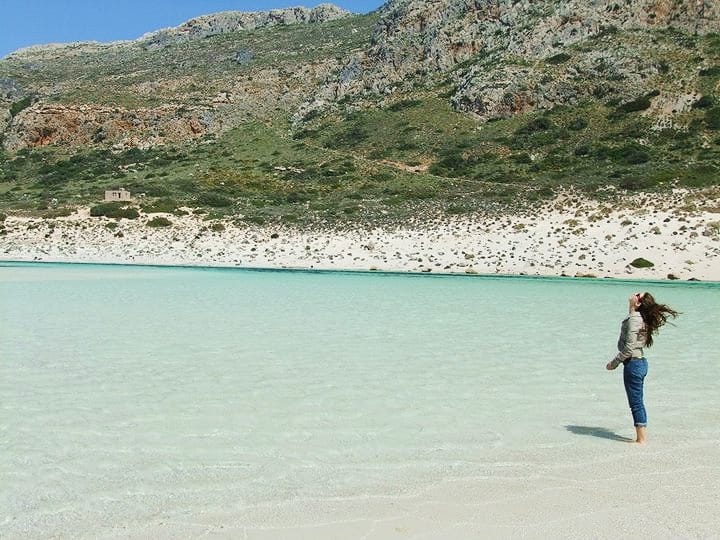
Balos, Crete

Grand Canyon National Park

Upstate New York


And if you’re a grinch who doesn’t care about the health of the planet or the animals on it, research has shown climate change has detrimental effects on humans, too. Higher temperatures, worsening air pollution, and more severe weather will all contribute to increased morbidity and mortality globally. 

Plateau Point, Grand Canyon National Park


So if you already cared about the planet (high five!), or you decided you care now that these sobering facts have scared you, read on for some lifestyle modifications anyone can try to reduce their impact on the planet.

Go vegetarian (or vegetarian-ish.) Believe it or not, this is one of the biggest and most important things you can do for the planet. Loss of unfarmed natural lands to farming is one of the leading causes of extinction, and because over 80% of farmland is used to keep livestock, which then produces 60% of agriculturally-generated greenhouse gas, cutting your meat and dairy consumption, even by 1 or 2 times a week, can have a huge positive effect on the planet.

Stop shopping. Or at least, cut back a bit. We have all been trained by media, the internet, and pretty much all the brands we rely on daily, to buy, buy, and then buy some more. Whether it’s upgrading your iPhone every time a new one comes out, switching cars every 1-2 years, or buying that cute new skirt because it keeps popping up on your Facebook feed, companies everywhere encourage us to go for the newest, the latest, the most cutting edge- when really, shopping our own closet or holding on to that smart phone a few more years will work just as well, save us some money and reduce our impact on the planet. Definitely something to think about.  

Support organizations trying to make a difference, if you can. There are many, many good programs out there working hard to protect the remaining wild places on the planet and hopefully slow climate change. This is not an exhaustive list- but a few organizations I like and have donated to in the past include The Rainforest Foundation, which specifically aims to protect the remaining tracts of forests across the globe, nationalparks.org and the official charitable partner of the NPS. Charitynavigator.org is a great place to go if you want to get more info on a specific charity or for top 10 lists for charities in different areas. Lastly, its always nice to support local groups if you can- I grew going to a nature center in our town that helped fuel my lifelong love of animals, is a place I always try to visit when I’m in town and donate to when I can.

Learn Something. Many of us have more free time on our hands than ever before. Instead of watching The Office re-runs (also a stellar choice, don't get me wrong!), tonight consider putting on a nature-focused documentary. Planet Earth has some absolutely stunning cinematography, and Chasing Coral on Netflix will open your eyes to how bad things have gotten for our ocean's reefs. There's so many great films out there that have a great story and can teach you a few things :)

Stay home. This virus has caused so, so much devastation, so I hope it doesn’t sound flippant to bring up the fact that staying home has had a positive impact on gas emissions and the planet. And when it is safe to move more, travel more and get outside, choosing vacations that are closer to home and limiting air travel really is a great way to reduce your impact on the planet.

There you go! Usually when I am making a list like this, I include a lot more on cutting back on single use items. Unfortunately, one of the downsides of the Covid-19 pandemic is that in certain situations, single use items may be safer- we just don’t know yet. As time rolls on, hopefully we can be more careful and selective about what stays single-use and where we can go back to reusable items. But for now, we are just following local guidelines in this area. 

Lastly, this is a really, really weird time right now. If any new changes in your habits or lifestyle sound overwhelming right now, if you don't have the financial means to donate to charities, or if you don't have the brain space to handle worrying about anything else, that is totally ok too. The most important thing right now is keeping ourselves afloat and safe, physically and mentally. 

What do you do to lessen your impact on the planet? Would love to hear more in the comments section :)

Stay safe out there,